CMCodex
Back to the Codex
Ibeji
Yoruba

Ibeji

The Twin Orixás of Childhood

Domain
Childhood, Joy & Twins
Alignment
Chaotic Good
Element
Air
Relics of Power
Sacred Toys
Speak with Ibeji

The People

People
Yoruba people
Region
West Africa & the diaspora
Period
c. 1000 AD – present

The orixás are worshipped by the Yoruba people of present-day Nigeria and Benin, with Ile-Ife as their spiritual center. Through the slave trade, their faith crossed the Atlantic and flourished in the Americas as Candomblé, Santería, and Vodou. It is today one of the most living and widespread African religious traditions in the world.

The Osun festival in Osogbo, Nigeria, draws thousands to the sacred grove of the Osun river, a UNESCO heritage site. The Ifá oracle guides decisions through the odus, and in Brazil the Candomblé terreiros honor each orixá with their own drums, dances, colors, and foods.

The Sacred Scrolls

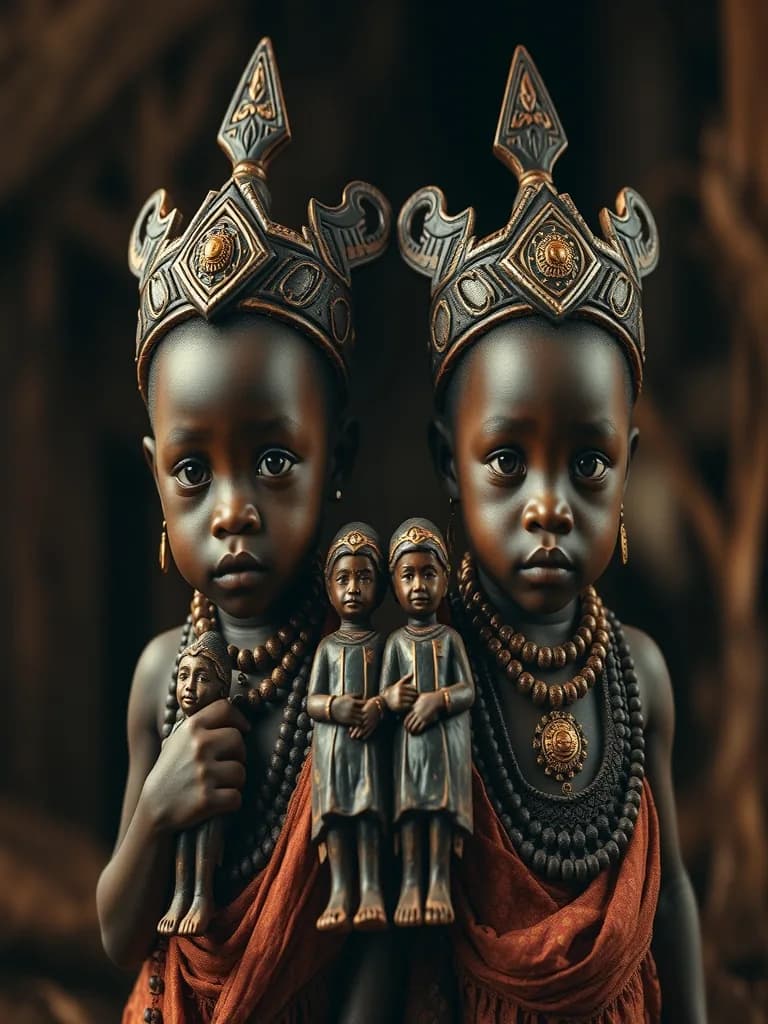
Twin orixás of childhood, joy, and play, the Ibeji represent duality, fertility, and youthful energy. Protectors of children and of twins, they bring happiness, spontaneity, and the purity of the young. They are worshipped with sweets, toys, and joyful festivals in their honor. As The Twin Orixás of Childhood, this deity occupies a position of supreme prestige in the iorubas pantheon. Their domains over Childhood, Joy & Twins reflect ancestral cosmic order maintained across millennia. In classical iconography, they are depicted with an aura of unshakeable majesty and sacred attributes that inspired reverence in emperors and peasants alike. Their influence extended beyond earthly boundaries, governing fates and harmony between the visible and invisible worlds. For ancient devotees, contemplating their essence was to understand the very fundamental forces of nature and human existence.

Sacred Symbols

The twin figurines, the sweets, the toys and the colors pink and blue

Divine Lineage

Twin orixás; protectors of children; tied to fertility and duality.

The Legendary Myth

The Yoruba people have one of the highest rates of twin births in the world, which made the Ibeji especially important in their culture.

Legends & Deeds

A celebrated secondary legend preserved in the oral traditions of the iorubas recounts the journey when Ibeji intervened directly in the lives of mortals.

Cult & Worship

Historically, the cult of Ibeji occupied a central place in the religious and architectural calendar of antiquity.

Relics of Power

The toys and sweets that symbolize the joy, purity, and energy of childhood.

Did You Know?

In Brazilian syncretism, the Ibeji are associated with the twin saints Cosmas and Damian, celebrated with the giving of sweets to children.

The rest of this scroll is sealed

The myth, the legends, the cult, the relic and the curiosity are part of the full Codex. Without a subscription you open 3 scrolls a day.

See Codex PRO

From the same pantheon

View pantheon