CMCodex
Back to the Codex
Rhea
Greek

Rhea

The Mother of the Gods

Domain
Fertility & Motherhood
Alignment
Neutral Good
Element
Earth
Relics of Power
Omphalos Stone
Speak with Rhea

The People

People
Ancient Greeks
Region
Greece & the Mediterranean
Period
8th c. BC – 4th c. AD

The Olympian gods were worshipped by the city-states of ancient Greece, from Athens to Sparta, which raised them temples such as the Parthenon. Reigning atop Mount Olympus, they presided over every aspect of life and were celebrated in festivals like the Olympic Games. Homer and Hesiod fixed their myths, which shaped all of Western culture.

The Olympic Games were held every four years in honor of Zeus, and the Panathenaea celebrated Athena in Athens. The Eleusinian Mysteries initiated the faithful into the secrets of Demeter and Persephone, while crowds consulted Apollo's oracle at Delphi.

The Sacred Scrolls

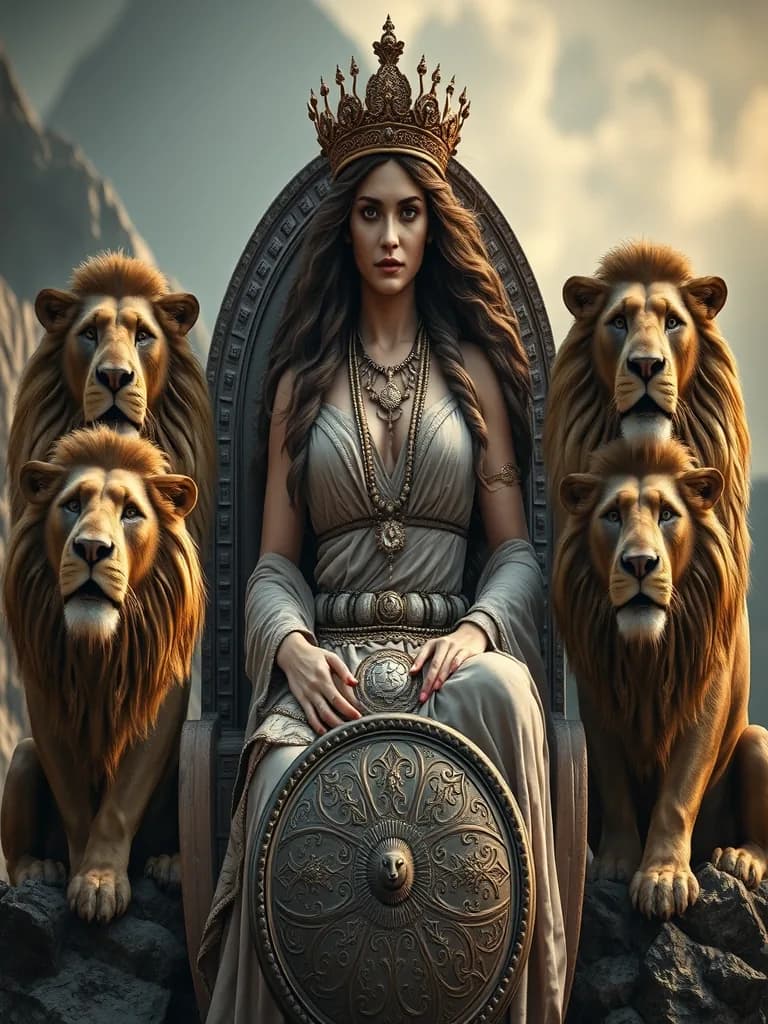
Titaness of fertility, motherhood, and the generative flow of nature, Rhea is the mother of the first Olympian generation. Wife of Cronus, she suffered as she watched her children devoured one by one. Her maternal cunning prepared the fall of the Titans and the rise of Zeus. As The Mother of the Gods, this deity occupies a position of supreme prestige in the olimpianos pantheon. Their domains over Fertility & Motherhood reflect ancestral cosmic order maintained across millennia. In classical iconography, they are depicted with an aura of unshakeable majesty and sacred attributes that inspired reverence in emperors and peasants alike. Their influence extended beyond earthly boundaries, governing fates and harmony between the visible and invisible worlds. For ancient devotees, contemplating their essence was to understand the very fundamental forces of nature and human existence.

Sacred Symbols

Lions, the throne, the ritual drum and the mural crown

Divine Lineage

Daughter of Uranus and Gaia; wife of Cronus; mother of the first six Olympians.

The Legendary Myth

Weary of watching Cronus swallow her children, Rhea hid the newborn Zeus on the island of Crete. In the baby's place, she handed her husband a stone wrapped in swaddling cloth, which he devoured without noticing the dece…

Legends & Deeds

A celebrated secondary legend preserved in the oral traditions of the olimpianos recounts the journey when Rhea intervened directly in the lives of mortals.

Cult & Worship

Historically, the cult of Rhea occupied a central place in the religious and architectural calendar of antiquity.

Relics of Power

The stone that replaced the newborn Zeus and deceived Cronus, a symbol of protecting motherhood.

Did You Know?

In Greek cult, Rhea was often identified with the Phrygian goddess Cybele, the 'Great Mother' worshipped with drums and ecstatic processions.

The rest of this scroll is sealed

The myth, the legends, the cult, the relic and the curiosity are part of the full Codex. Without a subscription you open 3 scrolls a day.

See Codex PRO

From the same pantheon

View pantheon