CMCodex
Back to the Codex
Astarte
Canaanite

Astarte

The Lady of Love and War

Domain
Love, War & Fertility
Alignment
True Neutral
Element
Light
Relics of Power
Evening Star
Speak with Astarte

The People

People
Canaanites & Phoenicians
Region
Levant (Syria, Lebanon, Israel)
Period
c. 3000 – 300 BC

The Canaanite gods were worshipped by the peoples of the Levant, including the Phoenicians, great navigators and traders of the Mediterranean. Headed by El and the storm god Baal, they were honored in cities such as Ugarit, Tyre, and Carthage. Their myths, rediscovered on the Ugarit tablets, closely echo the biblical traditions.

Worship followed Baal's agricultural cycle, with autumn festivals calling for the rains and laments for his descent into the world of the dead. The faithful worshipped at the "high places" (bamot) and in city temples, with stone steles, incense, and animal sacrifices.

The Sacred Scrolls

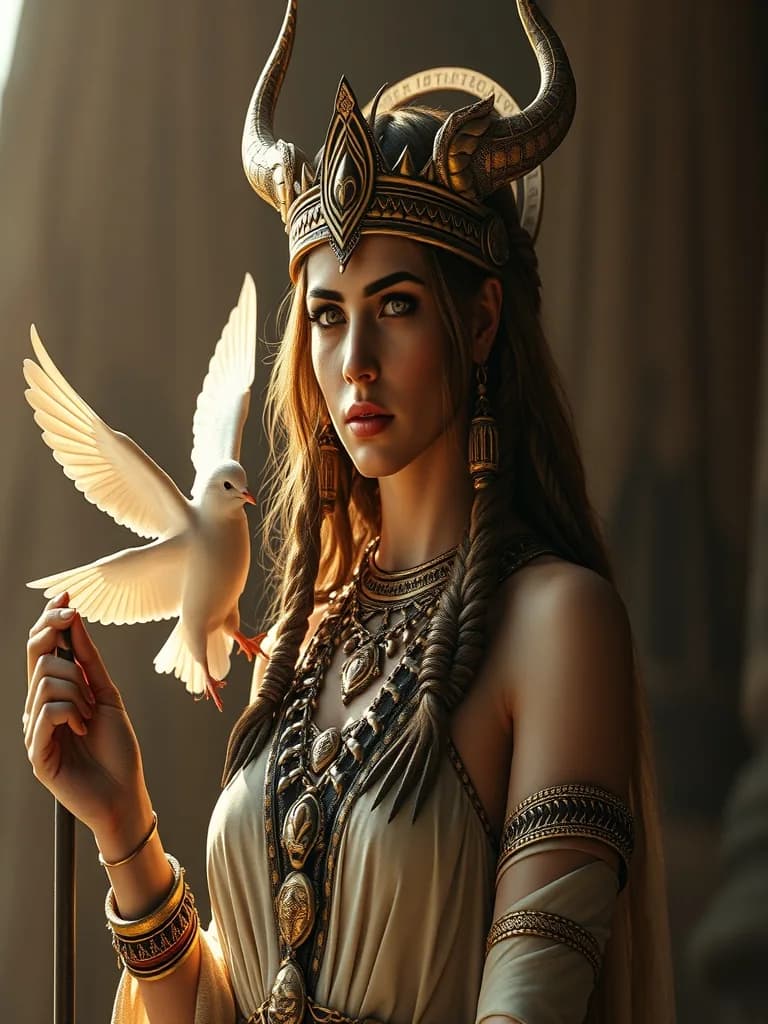
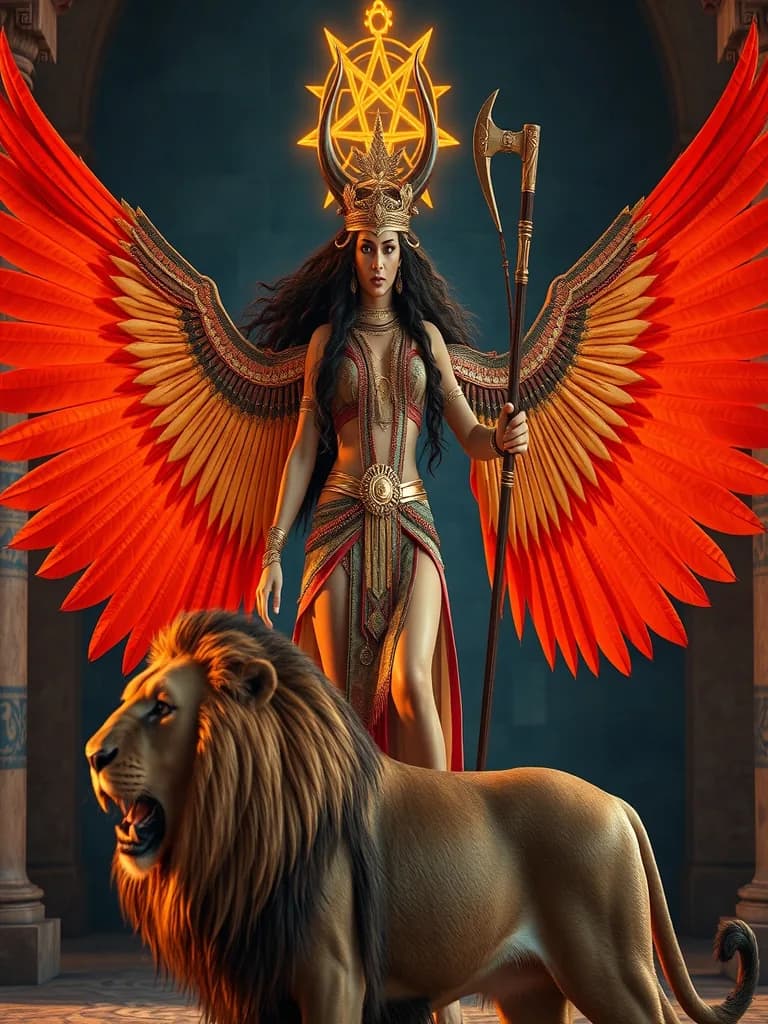
Astarte is the great Canaanite and Phoenician goddess of love, fertility and war, the western counterpart of the Mesopotamian Ishtar. Beautiful and powerful, she reigns over passion and sensuality, but also over the violence of battle. She was one of the most worshipped deities of the Phoenician cities, from Sidon to Tyre. As The Lady of Love and War, this deity occupies a position of supreme prestige in the cananeus pantheon. Their domains over Love, War & Fertility reflect ancestral cosmic order maintained across millennia. In classical iconography, they are depicted with an aura of unshakeable majesty and sacred attributes that inspired reverence in emperors and peasants alike. Their influence extended beyond earthly boundaries, governing fates and harmony between the visible and invisible worlds. For ancient devotees, contemplating their essence was to understand the very fundamental forces of nature and human existence.

Sacred Symbols

The star, the dove, the lion and the crescent moon

Divine Lineage

Associated with El and Baal; linked to Anat and identified with Ishtar and Aphrodite.

The Legendary Myth

Astarte was revered as queen of the heavens, patron of the fertility of the land and the womb, and protector of the Phoenician cities and sailors.

Legends & Deeds

A celebrated secondary legend preserved in the oral traditions of the cananeus recounts the journey when Astarte intervened directly in the lives of mortals.

Cult & Worship

Historically, the cult of Astarte occupied a central place in the religious and architectural calendar of antiquity.

Relics of Power

The star of dusk, symbol of her beauty and power, that reigns over both love and battle.

Did You Know?

The biblical Astarte appears under the Hebrew form 'Ashtoreth', deliberately distorted with the vowels of the word for 'shame', in a polemic against her cult.

The rest of this scroll is sealed

The myth, the legends, the cult, the relic and the curiosity are part of the full Codex. Without a subscription you open 3 scrolls a day.

See Codex PRO

Divine Equivalents

From the same pantheon

View pantheon