CMCodex
Back to the Codex
Shennong
Chinese

Shennong

The Divine Farmer

Domain
Agriculture & Medicine
Alignment
Lawful Good
Element
Earth
Relics of Power
Red Jade Whip
Speak with Shennong

The People

People
Chinese
Region
China
Period
c. 1600 BC – present

The Chinese deities bring together traditions of Taoism, Buddhism, and folk religion, worshipped for millennia across China. Presided over by the Jade Emperor, they form a vast celestial bureaucracy mirroring the earthly empire. They are honored in temples, at Chinese New Year, and at the altars of homes and ancestors.

Chinese New Year greets the gods with fireworks, dancing lions, and offerings to the Kitchen God, who ascends to heaven to report on the family's conduct. The Dragon Boat Festival honors the poet Qu Yuan, and at Qingming families sweep the tombs and venerate the ancestors.
The Sacred Scrolls

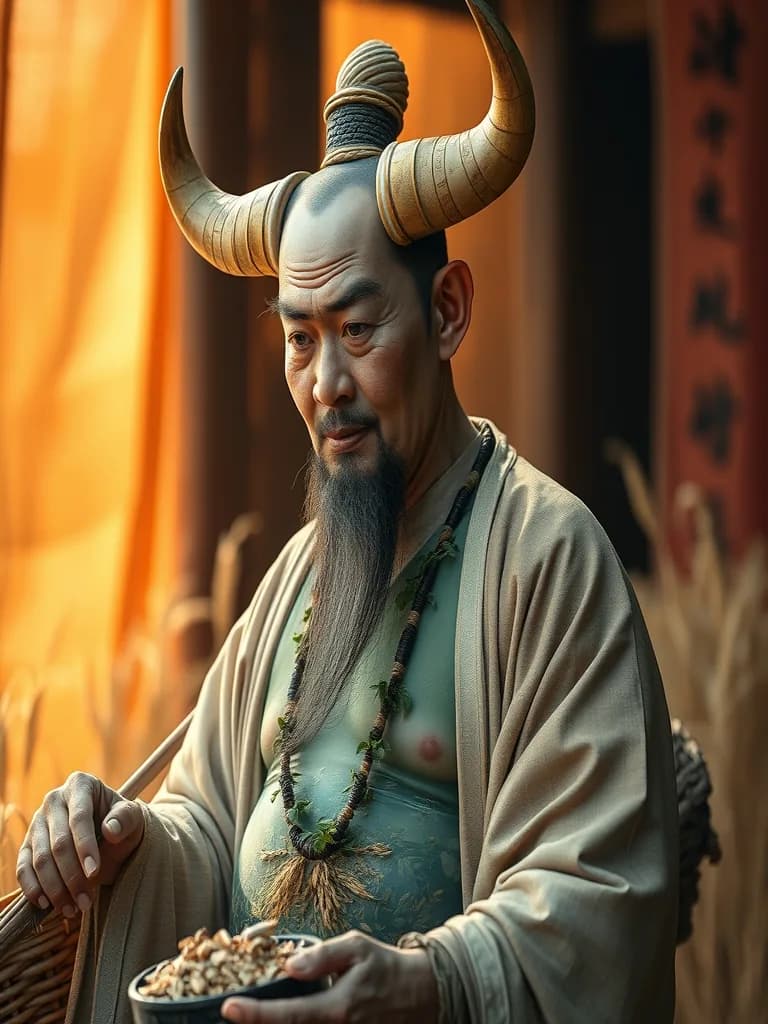
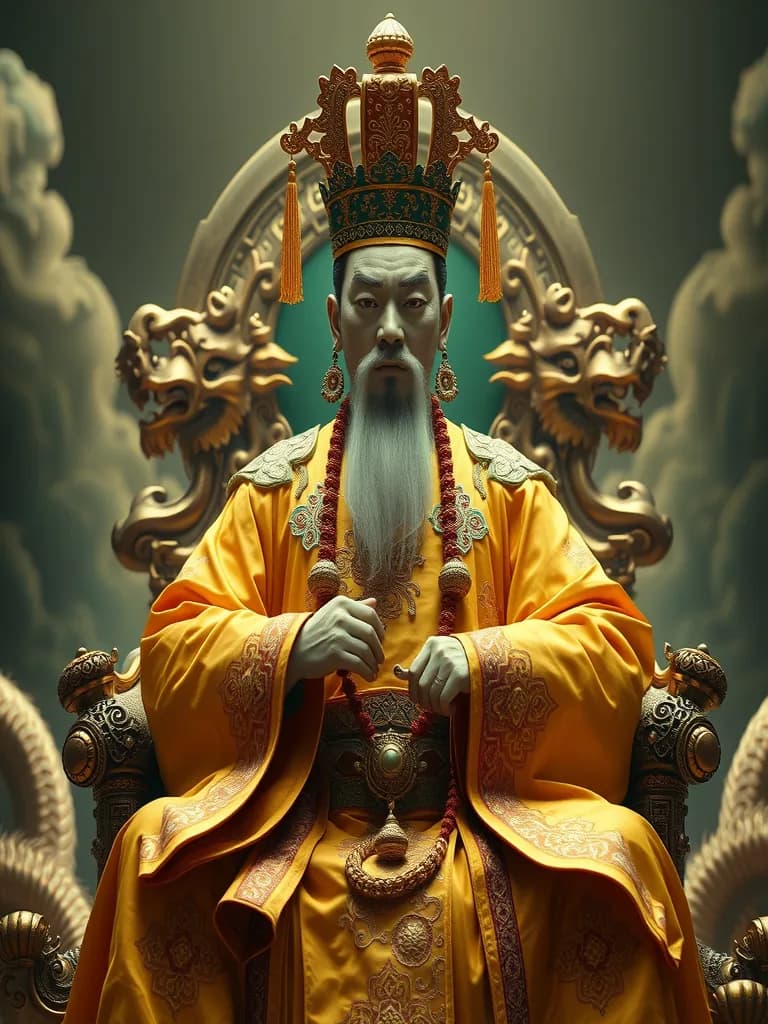
Divine farmer and father of Chinese medicine, Shennong taught humanity the cultivation of fields and the use of medicinal herbs. Depicted with horns and, at times, a translucent body, he is one of China's founding cultural heroes. He sacrificed his own health testing plants on himself to discover their properties. As The Divine Farmer, this deity occupies a position of supreme prestige in the chineses pantheon. Their domains over Agriculture & Medicine reflect ancestral cosmic order maintained across millennia. In classical iconography, they are depicted with an aura of unshakeable majesty and sacred attributes that inspired reverence in emperors and peasants alike. Their influence extended beyond earthly boundaries, governing fates and harmony between the visible and invisible worlds. For ancient devotees, contemplating their essence was to understand the very fundamental forces of nature and human existence.

Sacred Symbols

The plow, the medicinal herbs, the horns and the tea leaf

Divine Lineage

One of the Three Sovereigns; mythic successor of Fuxi in founding Chinese civilization.

The Legendary Myth

Legend says Shennong personally tasted hundreds of herbs to catalog which healed and which killed, recording the first treatise of medicine.

Legends & Deeds

A celebrated secondary legend preserved in the oral traditions of the chineses recounts the journey when Shennong intervened directly in the lives of mortals.

Cult & Worship

Historically, the cult of Shennong occupied a central place in the religious and architectural calendar of antiquity.

Relics of Power

A magic whip that, upon touching plants, reveals whether they are healing or poisonous.

Did You Know?

Shennong is credited with the discovery of tea: a leaf is said to have fallen into his boiling water, revealing its invigorating properties.

The rest of this scroll is sealed

The myth, the legends, the cult, the relic and the curiosity are part of the full Codex. Without a subscription you open 3 scrolls a day.

See Codex PRO

From the same pantheon

View pantheon